
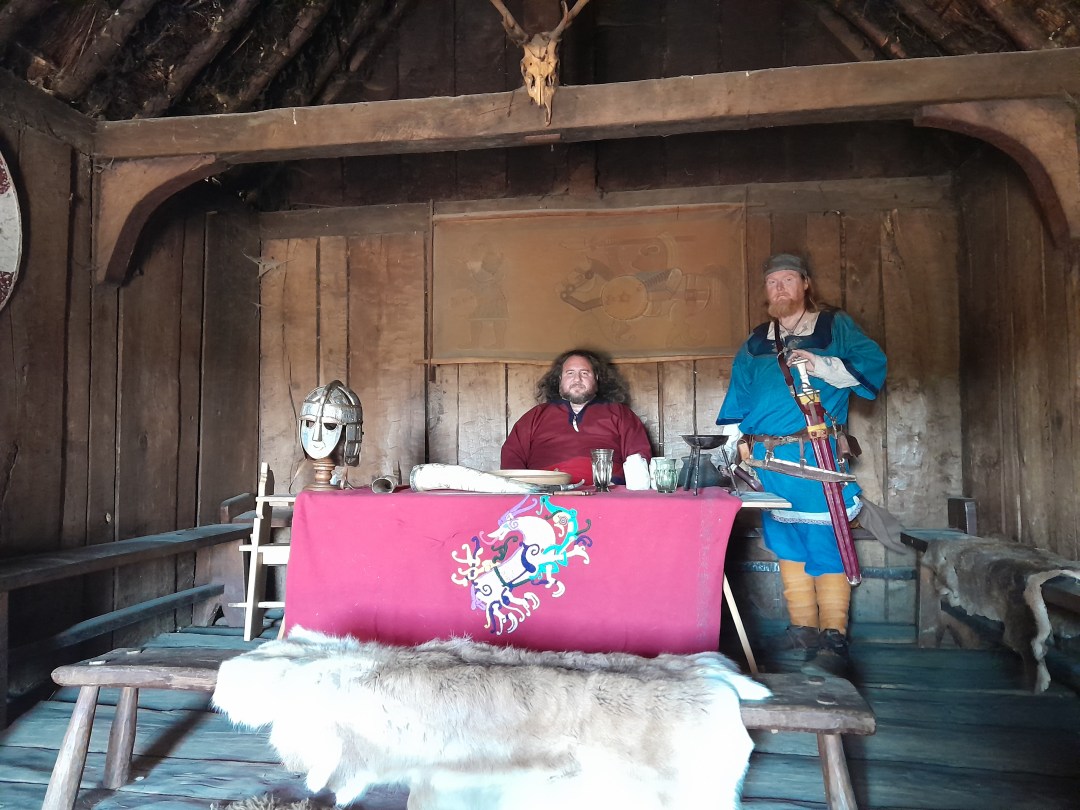
I think one of the greatest things about writing historical fiction is that you can do field research. Rather than merely going through books and articles it is a lovely change to go out into the field and view what is still left of the world you write about. That is why I will dedicate a small blog to my Suffolk trip and the fantastic historical experiences there.
Bury St. Edmunds
I started my trip in August this year and together with my father went straight from the ferry to Harwich. After staying for one night we went to a small place called Beyton, near Bury St. Edmunds, which would be our base for the rest of the week. The first thing that a writer of medieval history can enjoy there is the ancient countryside together with the warm atmosphere of a pub whose name one could well encounter during Anglo-Saxon times, The White Horse. The first thing to order was an ale and a cider, equally as Anglo-Saxon as the name itself. A great start indeed.
The Town
Of course Bury St Edmunds was a booming place in the eleventh century A.D., even though only a round church king Cnut had built stood guarding the crypt of the old martyr king (instead of the great many buildings that you can see now). While perhaps not entirely Anglo-Saxon anymore, the town certainly gives you a medieval feeling, with the massive Norman tower a clear reminder of who ruled there. Worth a visit for sure.

Friston
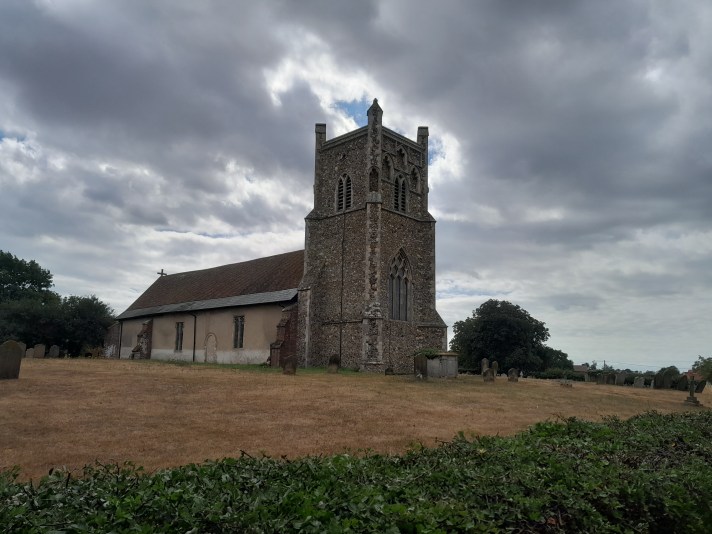
Of course I had to visit Friston, the base of my main character. Here I was invited warmly inside the church by its treasurer, Simon Ive, who even allowed me to peek from the Norman tower. Aside from enjoying an amazing view, I could now feel how Reginhard would look out for viking raids in the stunning East-Anglian countryside. Thank you Friston!
Thetford
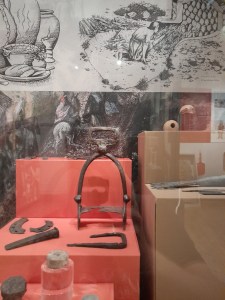
Thetford was a lovely place too and I was somewhat surprised to find a small museum, called Ancient House, that was filled with viking artifacts and even replicated viking cloths. Worth a visit for sure and like almost all towns in East-Anglia, it was very much in existence in the eleventh century.
West Stow Anglo Saxon Village
By far the best experience, both for the visualization of my novels, as well as overall experience was the West Stow Anglo Saxon Village. As the name suggests, archaeologists had replicated an entire Anglo-Saxon village, which was made alive by an assembly of reenacters called Swords of Penda. An amazing experience which I will carry with me each time I write a new part of the series.

Many, Many Motte-and-Bailey Castles
Of course England was heavily influenced by the Normans, who took control after 1066 and built many castles. Even though my books start before this period, there were already Normans living in England and they were even building castles too. Also, since Reginhard was not Anglo-Saxon, I thought it worthwhile to investigate what the difference was between a knightly castle, a baron’s castle and a larger earl’s castle. Of course, Reginhard’s would have been tiny, but it was amazing to the real size of these stunning defensive works and how truly massive the mottes were in this period. I certainly suggest you visit Suffolk if you like castles. I personally recommend Clare castle, Framlingham castle, and Hedingham castle especially.
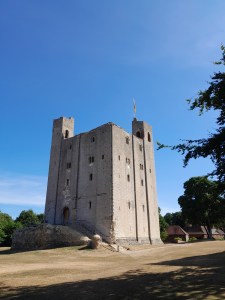
The End of the Trip
A week proved to be too short to visit everything worthwhile, and I am sure I would have done Reginhard and his friends a service by looking into even more. Yet still this trip felt like the best part of my research, by experiencing what the Anglo-Saxons left us. Even though I needed some imagination, I could almost hear the laughter of Reginhard’s family as he listened to his children from his wooden keep in Friston. I could almost view the monks chanting their trans-like hymns at Bury St. Edmunds and I could almost feel the fear Frethirik would have had spotting a Viking band approach from the top of Clare castle. In short, the trip will remain in my heart whenever the I feel the presence of my characters enter my mind. Thank you East-Anglia, and hope to see you soon!

join one of the last vikings on his quest for glory
Get a free historical short story
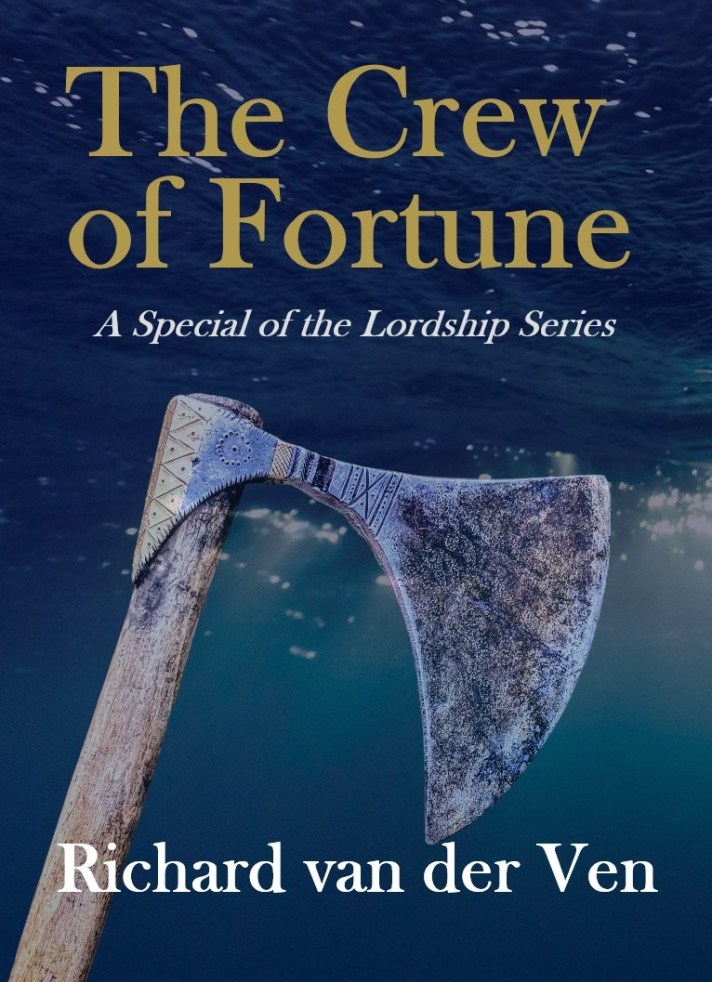
The Crew of Fortune follows some of the last Vikings to the edge of Norse society. Here a young Frisian captain needs to prove himself against unfamiliar enemies in his quest for recognition, glory, and plunder.

 Richard van der Ven
Hey Richard. Love your website. Very interesting and impressive. 🙂
LikeLike
Thanks Mark 🙂
LikeLike